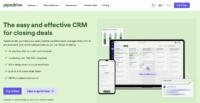
Most CRMs feel like they were designed by someone who’s never actually sold anything. Pipedrive was built by salespeople, and it shows. The entire product revolves around a visual pipeline where you drag deals from one stage to the next — and it stays out of your way while you do actual selling. For startup founders and small sales teams who need a CRM that doesn’t require a consultant to set up, Pipedrive is the one that keeps coming up.
What Is Pipedrive?
Pipedrive is a sales-focused CRM designed for small and mid-sized sales teams. Instead of trying to be everything (marketing automation, customer support, project management), Pipedrive focuses on one job: helping you manage your sales pipeline and close deals faster.
The core experience is a visual Kanban-style pipeline. Each deal is a card you move through stages — from lead to qualified to proposal to closed. You see your entire pipeline at a glance, know which deals need attention, and track activities (calls, emails, meetings) that move deals forward.
Key Features That Matter
Visual Pipeline Management: The drag-and-drop pipeline is Pipedrive’s signature. Create custom stages that match your sales process, move deals between stages, and see deal values and probabilities at every step. It’s intuitive enough that most users are productive within an hour of signing up.
Activity-Based Selling: Pipedrive is built around the idea that you can’t control outcomes, but you can control activities. Schedule calls, emails, and meetings tied to deals. The system nudges you when activities are overdue, keeping deals from going cold.
Email Integration & Tracking: Full two-way email sync with Gmail and Outlook. Track when prospects open your emails and click links. Send emails directly from deal records, and the full conversation history lives inside the CRM — no switching between tabs.
AI Sales Assistant: Pipedrive’s AI analyzes your pipeline and suggests actions — which deals to focus on, which are at risk of stalling, and what activities are most likely to lead to a close. Available on all plans, though it gets smarter on higher tiers.
Automation: Create workflow automations to handle repetitive tasks — auto-assign deals, send follow-up emails, update deal stages, create activities when conditions are met. Growth plan and above includes 30+ automation templates.
300+ Integrations: Connect with Slack, Zoom, Google Workspace, QuickBooks, Mailchimp, and hundreds more. The marketplace is well-stocked for a mid-market CRM.
Who Is Pipedrive Best For?
Pipedrive is built for startup founders running their own sales and small teams (2-15 people) who need a CRM that’s quick to set up and easy to maintain. If you’re a founder-led sales operation where you’re doing demos, sending proposals, and closing deals yourself, Pipedrive keeps your pipeline organized without burying you in admin.
It’s also strong for teams transitioning from spreadsheets. If you’ve been tracking deals in Google Sheets and you need something more structured, Pipedrive is the natural next step — it feels familiar while adding automation and analytics.
Where Pipedrive Falls Short
No free plan. Every competitor worth considering (HubSpot, Freshsales, Zoho) offers a free tier. Pipedrive starts at $14/user/month, which means you’re paying from day one.
Add-on costs are the real gotcha. Features like LeadBooster (chatbot + web forms + prospector) costs $32.50/month extra. Email campaigns, Smart Docs, and Projects are separate add-ons. A team on the Growth plan ($39/user) adding LeadBooster and Smart Docs can easily hit $70+/user/month.
Marketing features are minimal. If you need email marketing, landing pages, or social media tools alongside your CRM, you’ll need separate tools. HubSpot and Freshsales handle this better natively.
Reporting on lower tiers is basic. Custom dashboards and advanced analytics require the Premium plan ($59/user/month). The Lite and Growth plans give you standard reports but limited customization.
The Bottom Line
Pipedrive remains one of the most intuitive CRMs for deal-focused sales teams. The visual pipeline is genuinely best-in-class, the activity-based approach keeps deals moving, and most teams are productive within hours — not weeks. Just budget for add-ons beyond the base price, and know that you’ll outgrow it if your needs expand into marketing automation or customer support.